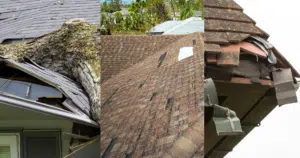
A roof is one of the few parts of a home that you only think about when it fails, and that’s exactly why understanding the life span of your roof matters. Most U.S. homeowners see “20 years” on a brochure, then learn the hard way that real-world performance depends on workmanship, ventilation, weather, and upkeep.
Average Lifespan of a Roof with Different Materials
The average lifespan is not one single number because the “roof” is a system: deck, underlayment, flashing, ventilation, and the outer covering. Material choice still sets the baseline, so start here, then adjust for your house and region.
| Roofing system (surface) | Typical service life (years) | Common weak points | Practical note |
| Asphalt shingles | 12 to 20 | granule loss, cracking, blow-offs | Heat and wind exposure shorten performance and asphalt shingle roof lifespan |
| Standing seam or metal shingles | 30 to 50+ | fasteners, coating wear | Many metal roofs carry 30 to 50-year warranties |
| Clay or concrete tile | 50 to 100+ | cracked tiles, aging underlayment | Tile can last 50 to 100 years or more |
| Slate | 60 to 125+ | flashing, nails, mortar | NPS guidance cites roughly 60 to 125 years |
| EPDM (low-slope membrane) | 25+ (well designed and installed) | seams, penetrations, ponding | NRCA notes 25 years and more is achievable |
For planning and resale, the average roof lifespan in a given area is often shorter than the warranty period. Ask contractors to explain the expected years of service for your layout and exposure, not the average lifespan of roof systems in the abstract.
Warranty vs. real service life is where a lot of homeowners get caught off guard, because marketing language and warranty language are not the same thing. In the field, details like deck prep, underlayment quality, and flashing execution typically decide whether a roof reaches its expected service life. Here’s what to know before you look for a contractor:
- A warranty is conditional. It’s a legal promise with exclusions, proration rules, and required paperwork, not a guarantee the roof will last that long on your house.
- Installation quality often matters more than the label. Ventilation balance, deck condition, underlayment selection, and flashing workmanship usually drive performance more than the brand name on the bundle.
- Ask for proof of the critical details. Request clear photos of valleys, pipe boots, wall flashings, and other transitions before the roof is “closed up,” plus confirmation of the exact products used.
- Get a written maintenance plan. Ask for inspection frequency, cleaning guidance, and a simple list of what voids coverage, along with what the manufacturer considers normal weathering versus a warrantable defect.
If you’re hiring for a replacement, it is also worth confirming wind ratings and fastening requirements for your ZIP code. The Metal Roofing Alliance, for example, points out that many metal systems are rated up to 140 mph winds when properly installed.
Factors That Affect the Lifespan of a Roof

If you want to estimate the lifespan, focus on what fails first in the field:
- Details and transitions. Flashings at chimneys, walls, skylights, and vent stacks are frequent leak origins.
- Ventilation and moisture. Heat and trapped humidity accelerate aging and can degrade the deck.
- Drainage. Standing water punishes low-slope roofs and stresses seams and penetrations.
- Maintenance. The National Roofing Contractors Association recommends inspections at least twice per year, plus after severe weather.
These are controllable variables. Fixing them early is the simplest way to protect roof life expectancy.
Does Climate Affect Roof Life ?

Yes. The U.S. Department of Energy notes conventional roofs can reach 150°F or more on a sunny summer afternoon, while a reflective roof could stay more than 50°F cooler under the same conditions. Lower surface temperature reduces thermal cycling and may extend service life.
Cold climates add freeze-thaw stress and ice dams, while coastal regions combine salt exposure and sustained winds that can work edges loose over time. Storms are the wildcard nationwide. NOAA’s 2024 assessment identified 27 U.S. billion-dollar weather and climate disaster events, and NOAA’s long-term database shows hundreds of major events since 1980.
That’s why the same material can deliver very different life results from Arizona to Florida to Minnesota.
Signs Your Roof Longevity Is Near the End

Roofs rarely fail overnight. More often, several indicators show up together that longevity is running out:
- missing, loose, or lifted shingles
- curling, cracking, or bald spots where granules are gone
- soft spots or sagging that suggest deck deterioration
- recurring leaks at flashings even after patching
- rust, open seams, or loose fasteners on metal roofs
- cracked or slipping tiles, plus signs the underlayment is aging underneath
If two or three of these are happening at once, stop guessing and start planning.
How To Extend Your Roof Lifespan

You cannot stop weathering, but you can avoid the avoidable failures that force early replacement.
- Inspect on a schedule (spring and fall is the common baseline), plus after severe weather.
- Keep water moving: clean gutters, downspouts, and drains; fix ponding.
- Clear debris and trim trees: organic buildup holds moisture and scrapes surfaces in wind.
- Prioritize flashings and penetrations: replace aging pipe boots and keep terminations sealed.
- Improve ventilation and insulation to reduce heat and moisture stress.
- In hot climates, consider reflective options. DOE notes cool roofs reduce roof temperature and may extend roof service life.
When those basics are in place, you have a realistic shot at improving lifespan without changing the covering.
Across the U.S., the average life of a roof is shaped by maintenance and exposure more than most homeowners expect. Small, documented repairs also make it easier to budget for the eventual replacement.If you want a clear plan for your roof system, Ecobuild Roofing Services can provide a condition assessment and maintenance roadmap that targets the highest-risk details first. That kind of evidence-led upkeep is the simplest way to protect roof lifetime value and avoid surprise leaks.